

Second Chances Aren’t a Feeling. They’re a Practice
What Would Ted Do? Season 3, Episode 11

What Would Ted Do? is my weekly, bite-sized breakdown of Ted Lasso episodes through a leadership lens: practical lessons on trust, culture, conflict, and resilience you can take into your week.

This episode puts second chances under a microscope and asks a harder question than most shows bother with: what actually earns one.
Nate is wanted back on the team and has the votes to prove it. Jamie wants his old game back and doesn’t know where it went. Ted wants an ordinary visit from his mother and gets a complicated one instead. Wanting something back doesn’t get any of them there.
What does get them there is way smaller: someone shows up, someone tells the truth, someone remembers what they were once forgiven for. That’s the episode, really.
Colin, Isaac, and Will show up at the Taste of Athens to ask Nate to come back. It’s not a small ask. The whole locker room signed off on it. But Nate hesitates, because nobody asked Beard, or any of the coaching staff, whether they wanted him back too.
He’s right to hesitate.
A decision the team loves can still be the wrong decision if the people who have to live with it every day weren’t in the room. Popularity isn’t buy-in. The players who’ll shake Nate’s hand at kickoff aren’t the ones who’ll sit next to him in tactics meetings for the next six months. Reinstating someone by majority vote skips the slower work of getting agreement from whoever actually has to rebuild the working relationship, and that’s a smaller, less enthusiastic room than the one that voted yes.
Keeley tries to help Jamie the way you’d help most players in a slump: she names the stakes. It’s Man City, his old club. His dad will be in the crowd, booing. Richmond is closing in on the title. Big game, big moment, rise to it.
It doesn’t land.
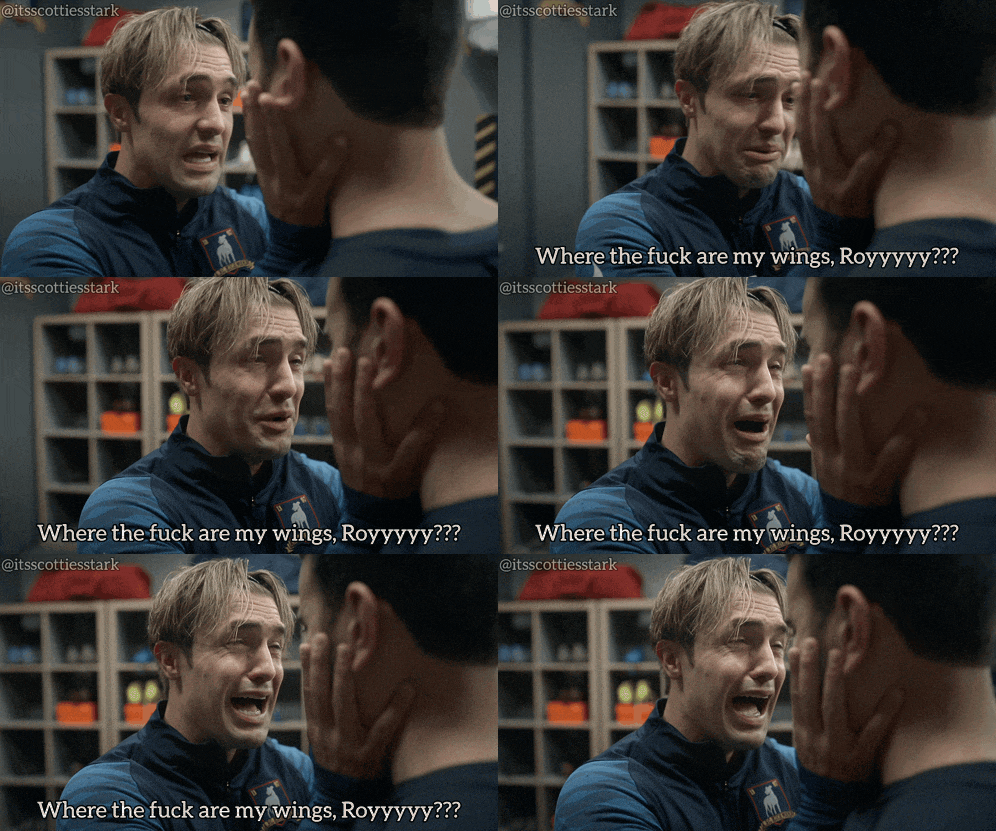
Pressure doesn’t fix a player who’s lost his sense of self. It only makes the weight heavier. Jamie isn’t undercooked on motivation. “I feel like I’ve lost me wings, Roy” isn’t the sentence of someone who needs a reason to care more. It’s the sentence of someone who doesn’t know who he is on the pitch anymore. Treat an identity problem like a performance problem and you get the opposite of what you wanted, which is exactly what happens here.
So Roy and Keeley try something less clever. After the team’s movie night, they follow Jamie through Manchester and end up, without much of a plan, at his mum’s front door.
She’s the one who gets through.
“You’re not lost. You’re just not sure which direction you’re going. Yet.”
That word “yet” is doing most of the work. Being unsure of your direction is not the same as being lost. One is a place you can’t find your way out of. The other is just where you happen to be standing right now. It’s a small reframe with a large effect: it turns a crisis into a phase, and a phase is something you can coach a person through.
Beard wants nothing to do with Nate’s return. He’s not being petty. He watched Nate torch the thing they built together, and he doesn’t trust that it won’t happen again.
Ted doesn’t argue with him. He shows him something instead: old footage of Nate hiding under the table the night they clinched promotion, tearing up the “Believe” sign after everyone else left the locker room.
“I hope that either all of us or none of us are judged by the actions of our weakest moments, but rather by the strength we show when and if we’re ever given a second chance.”
It’s the line the episode is built around, and it cuts both ways. It’s not just permission for Nate. It’s a standard Ted is asking to be held to himself, and one he’s asking Beard to extend at the exact moment Beard has every reason not to.
Beard goes to see Nate anyway. He tells him a story instead of handing him a decision: the version of himself Ted took a chance on after prison, no conditions attached. It sits close enough to Valjean and the bishop’s candlesticks that the resemblance seems deliberate.
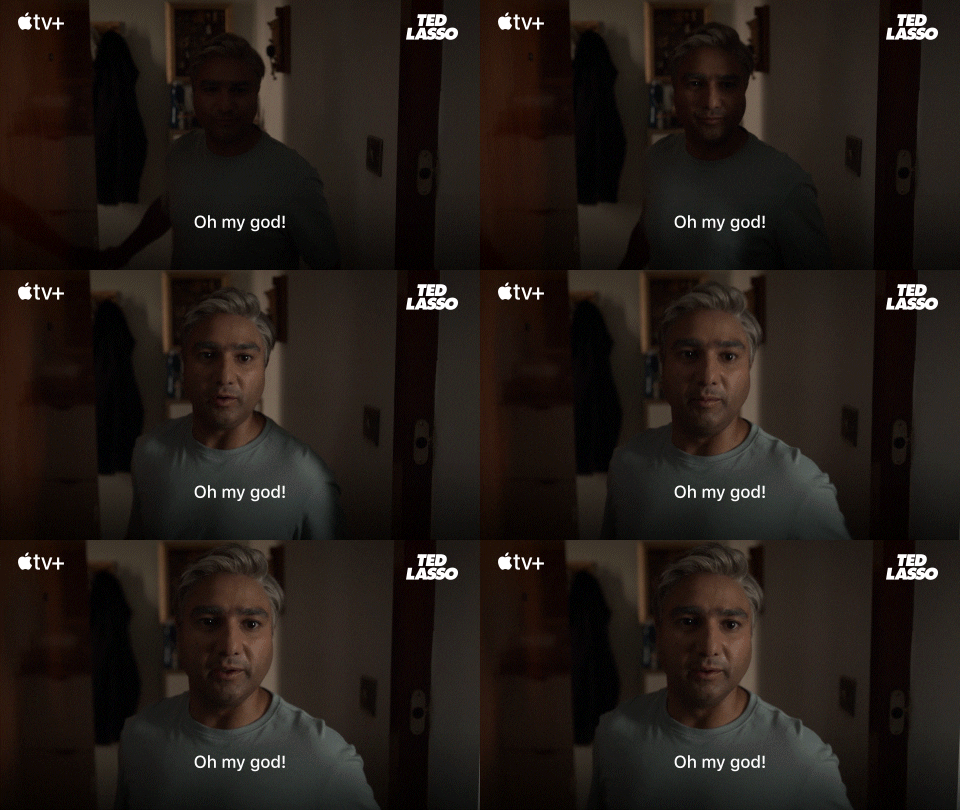
Then he forgives him and invites him back.
The forgiveness you’re slowest to extend is usually the one you’ve forgotten you already received. Beard’s resistance doesn’t crack because Nate makes a good enough case. It cracks because Beard remembers being Nate: standing exactly where second chances get handed out, and someone handing him one anyway. Most of us carry at least one debt like that. Forgetting it is what makes us stingy with the same thing later.
Mae gives Ted a rhyme earlier in the episode about how parents mess up their kids, close enough to Philip Larkin’s poem “This Be the Verse” (”They fuck you up, your mum and dad”). It sets up the real conversation: Ted finally tells his mother the complicated thing instead of the polite thing.
She doesn’t defend herself. She just says: “Your son misses you.” This is why she came to visit. And it absolutely wrecks Ted.
The most useful thing you can say to someone who shaped you badly is what you actually feel. Politeness protects a relationship in the short run and starves it in the long one. Ted gets further with his mother in one honest exchange than he would in years of a comfortable, careful distance.
None of it happens because someone gave a speech. Nate gets back on the team because a teammate remembered what it felt like to need forgiveness himself. Jamie finds his game again because his mother named what he actually felt instead of what would motivate him. Ted gets closer to his mother because he stops being careful with her.
Second chances aren’t a mood that shows up once someone’s earned enough sympathy. They’re closer to a practice, something you choose to extend again and again, especially toward the people who are least convenient to forgive.
Anyone can forgive someone they already like. That’s the easy version of the lesson. The harder version is the more useful one.
Extending grace on the good days doesn’t take much. The practice is doing it on the days you’d rather not.
Subscribe to make sure you don’t miss the season finale next week!