


What Would Ted Do? is my weekly, bite-sized breakdown of Ted Lasso episodes through a leadership lens: practical lessons on trust, culture, conflict, and resilience you can take into your week.

Near the end of this episode, Isaac finally confronts Colin about everything he’s been carrying.
He’s hurt. He wants to understand. He asks the question that’s been sitting under all the weirdness between them for weeks:
“What is it about me that made you think you couldn’t tell me?”
And Colin gives him the only honest answer there is.
“It had nothing to do with you. The 1% chance that you wouldn’t support me — that terrified me.”
That exchange is the whole episode. The logic of hiding — the terrible maths of self-protection — laid out in two sentences. We guard ourselves against the small probability of rejection and pay for it with the certainty of distance. We deny the people who love us the chance to show us who they are. And we call it protecting ourselves.
This episode is full of people running that same calculation. Roy, in his own way. Nate, discovering his is broken. Isaac, not knowing what to do with something he didn’t ask to know. The episode keeps asking: what are you protecting yourself from? And at what cost?
Roy skips the press conference. Beard covers for him. It goes badly. Rebecca steps in.
Then she finds Roy and says what she’s been watching build for a while.
“You’re just so convinced that you don’t deserve anything good in your life that you’d rather eat a bowl of shit soup and complain about the portions. Get out of your own way, man.”
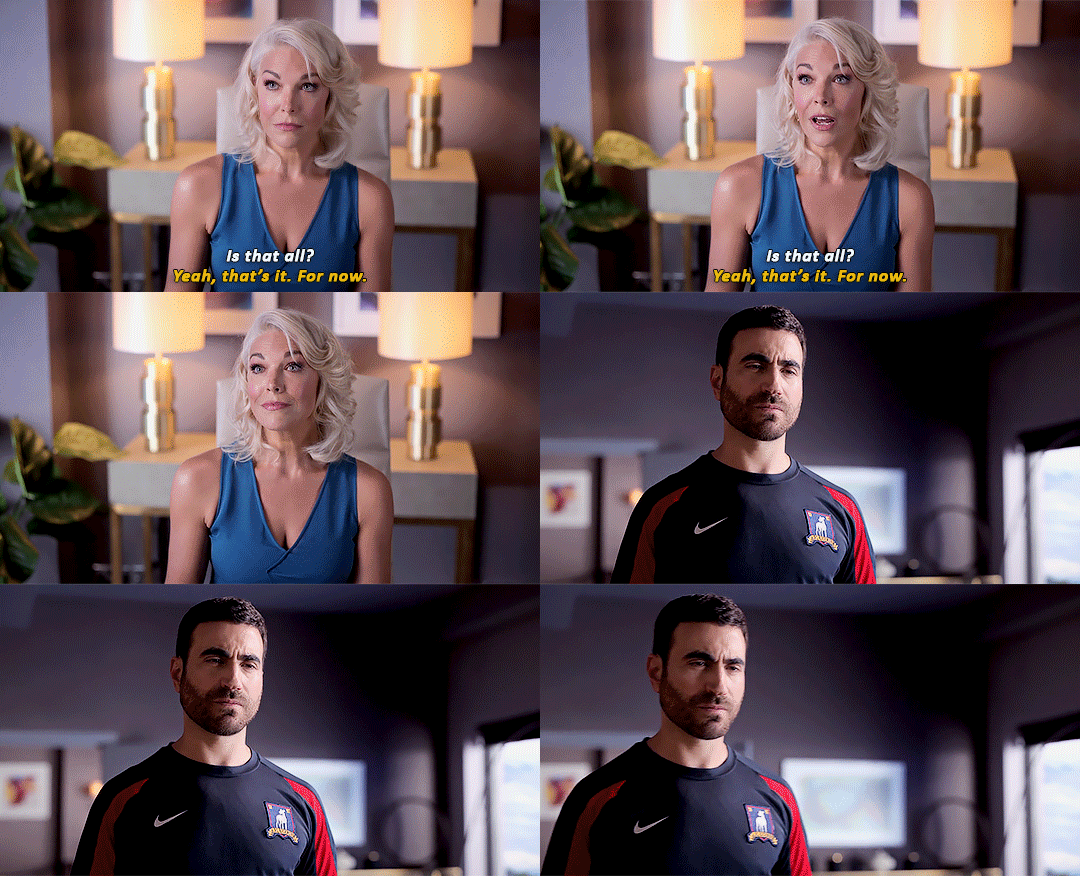
The most useful thing a real friend can do is name the pattern you’ve stopped being able to see.
Roy isn’t lazy or indifferent. He’s self-sabotaging, which is a different thing entirely. He pulls away from the things that would be good for him — the press conference, the visibility, the professional belonging — because somewhere underneath the competence and the fury, he’s decided he doesn’t quite deserve them. Rebecca has watched this for long enough. She names it without softness, because softness isn’t what Roy needs and she knows it.
The shit soup line is funny. It’s also one of the most precise descriptions of a particular kind of self-destruction the show has offered - choosing the worst option and then being aggrieved about it. It’s everywhere, in every workplace, in every life. You probably know someone doing it right now.
Isaac has known about Colin since the phone, and he doesn’t know what to do with it.
He can’t pretend he doesn’t know. He can’t bring himself to say something. So he goes sideways: distant, strange, newly awkward in a way Colin can feel but can’t explain. Colin goes to Trent Crimm for advice. Isaac is changing the texture of their friendship because of a secret that isn’t even his to keep.
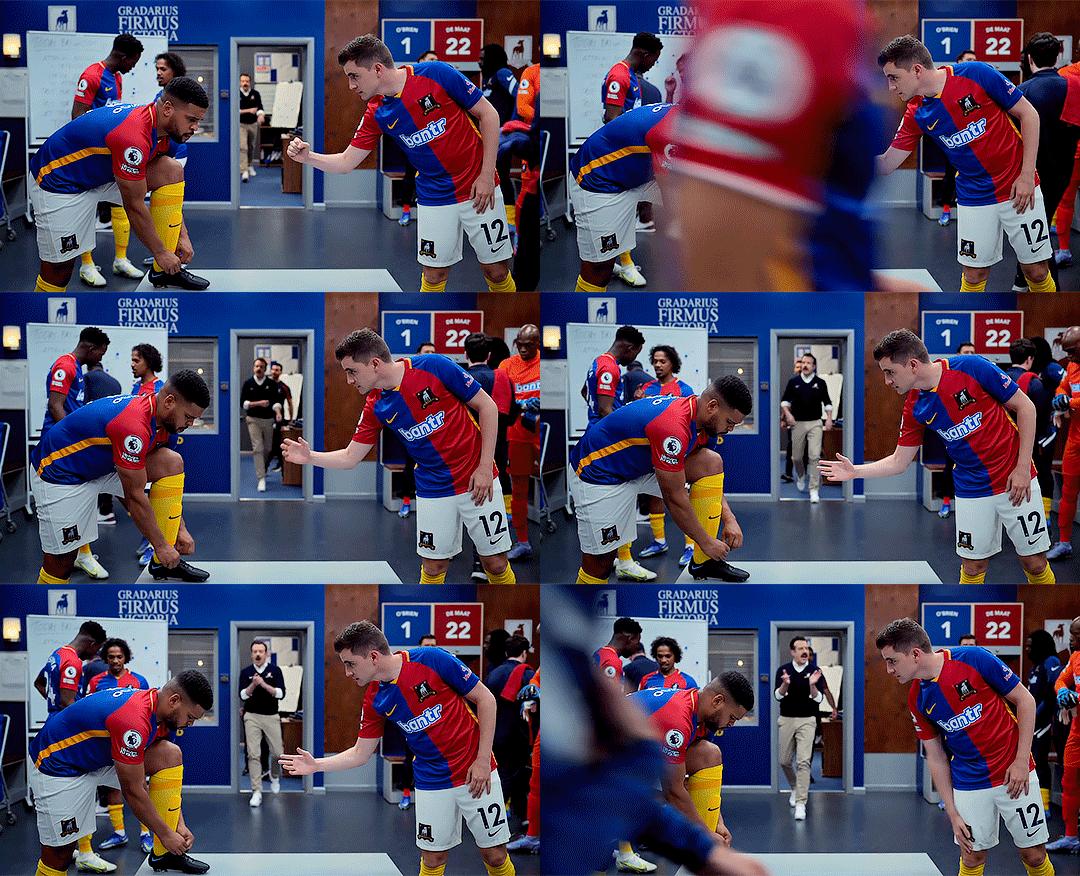
Unspoken knowledge changes a relationship even when nobody says a word. The thing you know but haven’t addressed is already there, between you, shaping everything.
This is the cost of the 1% calculation from the other side. Colin’s silence to protect himself becomes Isaac’s confusion becomes a distance neither of them wanted. Secrets metastasise. They don’t stay contained to the person keeping them. They leak into the room and change the temperature for everyone.
Isaac lashes out at a fan in the stands who uses a homophobic slur about the team.
The whole dressing room is caught off guard. This isn’t the thing they were expecting from him. He doesn’t explain himself. He just turns to the room and asks, with everything underneath it:
“What if one of us is gay?”
Then he walks out.
Sometimes the clearest act of allyship is the one that happens before it’s been asked for, in a room full of people who don’t yet know why it matters.
Isaac can’t say what he knows. He can’t out Colin and he wouldn’t. But he can put the question in the air. He can force the room to sit with it, to answer it implicitly, to show what kind of team they actually are before the moment arrives. It’s not a perfect act. It’s a clumsy one, full of anger and confusion. But it’s real. And it does the thing it needed to do.
Colin comes out.
The team’s response is immediate and complete. An outpouring of support. The thing Colin spent years protecting himself from turns out to be the opposite of what he feared.
Meanwhile, in a separate room, Roy sits with Isaac and helps him work through his anger. Two different versions of the same moment, happening in parallel. Colin receiving what he was afraid to ask for. Isaac processing the fact that a friend didn’t trust him with something that mattered.
Belonging is not only about being accepted but also about being freed from the cost of hiding.
There’s a version of this that ends at the support — the hug, the locker room, the teammates who showed up. But the episode doesn’t stop there. Colin’s inspired performance in the second half, the 2-1 comeback win — that’s the other half of what happens when someone stops carrying something alone. The energy that was going into the hiding becomes available for everything else. It’s not metaphorical. It’s right there on the pitch.

Jade brings Nate lunch at West Ham.
Their interactions are warm in a way that Nate’s whole arc at the club hasn’t been. She’s easy with him. Comfortable. And when she meets Rupert — the charming, powerful man who runs the place — she’s pleasant but clear-eyed. She’s not taken in. She keeps a quiet, polite distance that says: I see you.
Later, Rupert takes Nate out for what he calls a guys’ night. It turns into something else — Rupert looking for a party, not a colleague. Nate has been loyal to a performance, and the performance just dropped the pretence.
He leaves.
The person you’re loyal to and the person they actually are can diverge slowly and then all at once. Jade saw it before Nate did. She usually does.
Jade has been the clearest-eyed person in Nate’s life all season. She’s not impressed by Rupert’s charm because she wasn’t looking to be impressed by it. She’s looking at Nate. And Nate is starting to look at Rupert the same way she does and not liking what he sees.
After the match, Roy voluntarily goes to the press conference.
Nobody asked him to. Nobody forced him. He shows up which, given the earlier conversation with Rebecca, is its own kind of answer to the shit soup.
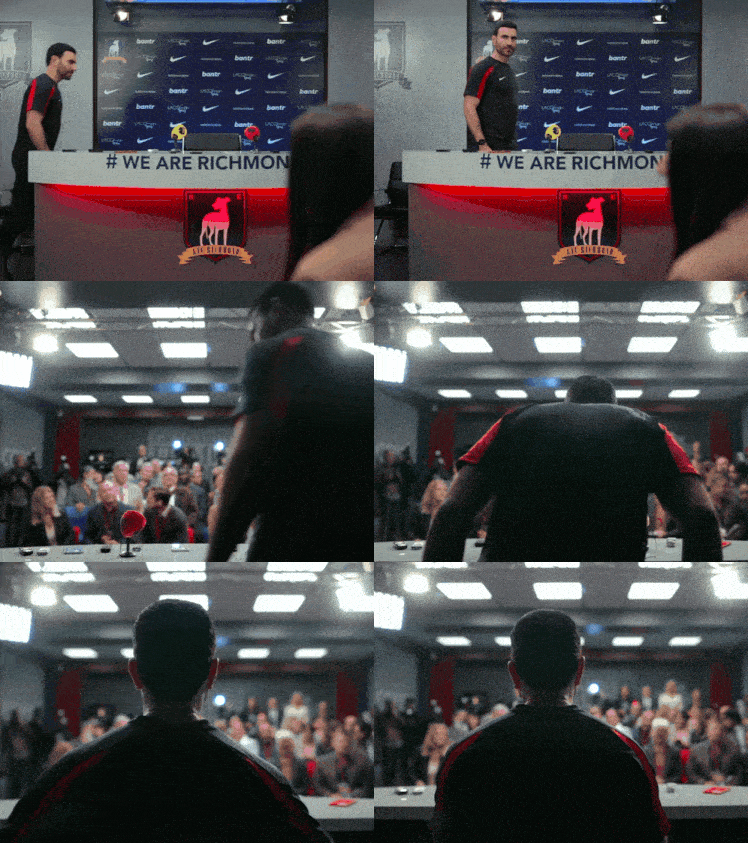
He gets asked about Isaac’s outburst. He doesn’t deflect or dodge. He tells a story from when he was young. He made a stupid joke once — the kind of joke you make when you’re young and unthinking and part of a group. And another player heard it and lashed out. Roy didn’t understand why at the time. He does now.
The best way to protect someone in public isn’t always to shield them. Sometimes it’s to tell a story that moves the attention to you and explains everything without saying a word.
Roy just told the press that Isaac’s anger makes sense, that it came from somewhere human and real, without explaining anything he wasn’t supposed to explain. He covered Colin without naming him. He covered Isaac without excusing him. He did it by making himself the cautionary tale. That’s growth.
The season has been quietly building to this episode’s final conversation.
Isaac: heartbroken that Colin didn’t trust him. Colin: it had nothing to do with you. The 1% chance you wouldn’t support me, that terrified me.
And then Isaac has to sit with that. His friend didn’t hide because of something Isaac did or was. He hid because the stakes of being wrong — the tiny, 1% probability of rejection — were unbearable.
The 1% chance of rejection costs people the 99% certainty of being loved. That maths is everywhere. In every team, in every relationship, in every person who hasn’t said the true thing yet.
Isaac is hurt. He has every right to be. And he also has to understand that his record wasn’t the point. The size of what Colin was risking made the probability irrelevant. When the stakes are that high, even certainty isn’t certain enough.
That’s the hardest thing about vulnerability. It asks you to act on the 99% while the 1% has a louder voice.

Roy shows up. Colin stops hiding. Nate starts seeing clearly. Isaac’s anger becomes something real. And the team wins — comes back from behind, led by the person who finally stopped carrying something alone.
The shit soup was optional the whole time. So was the hiding.
What Would Ted Do? goes out every week. If this landed, share it with someone who’d appreciate it — or just hit subscribe and I’ll see you next episode.*